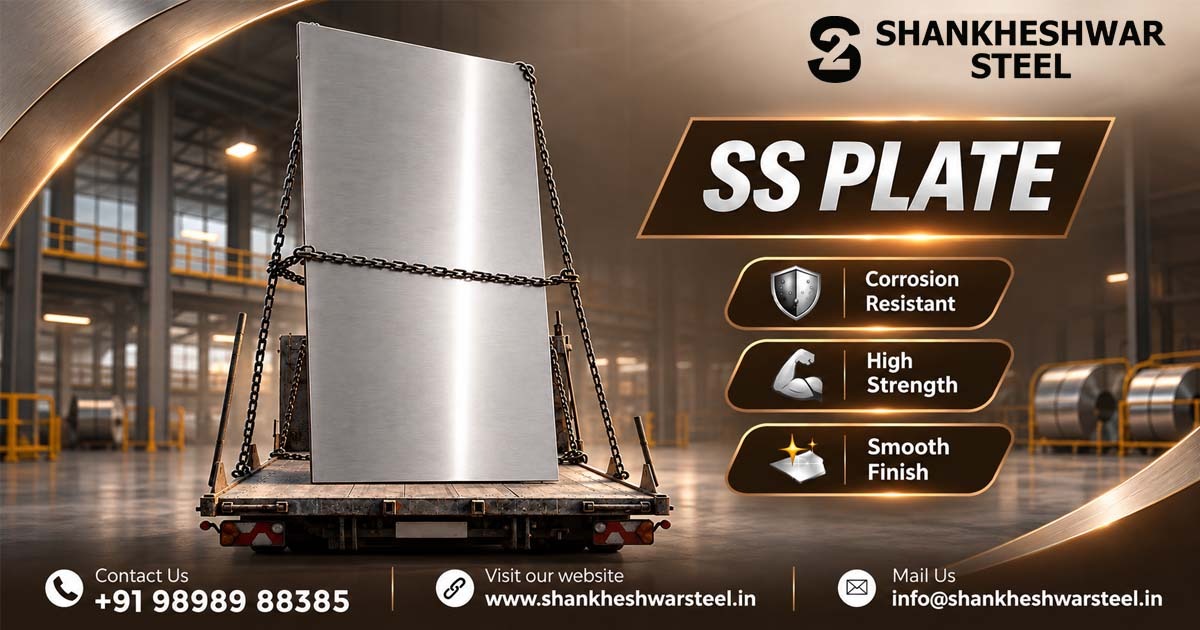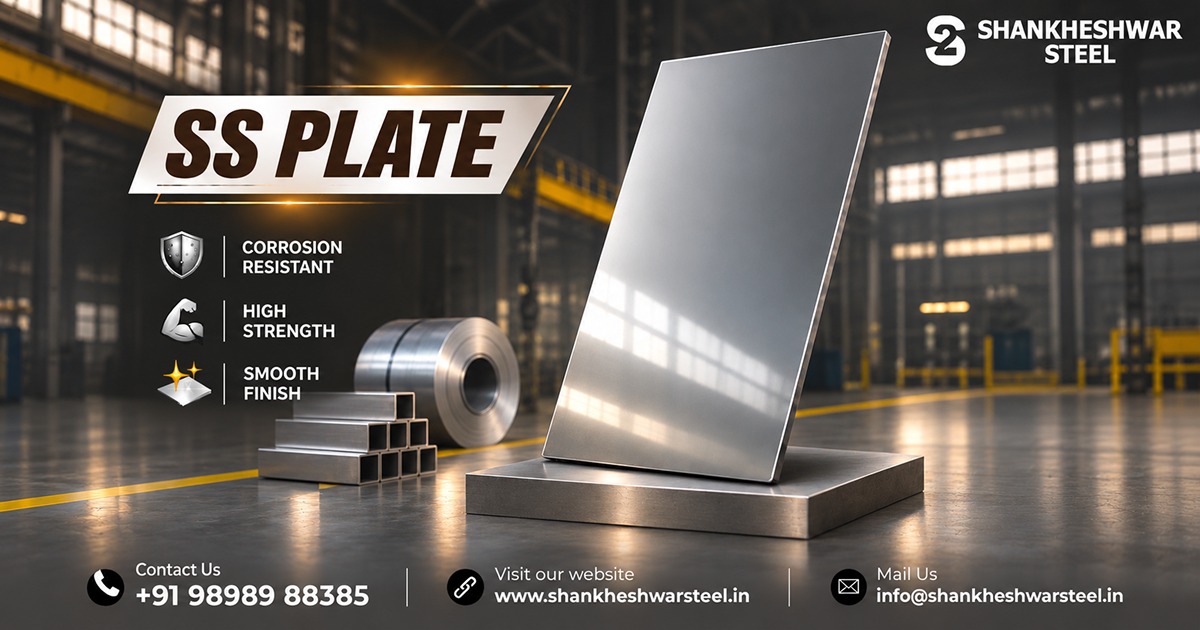
Industrial tanks, pressure vessels and machinery require stainless steel plates suited to their operating conditions. SS Plate Materials for Tank, Vessel and Machinery Production help fabricators plan material thickness, corrosion resistance and fabrication requirements for industrial projects in Ahmedabad, Gujarat, India. Shankheshwar Steel supports material coordination for industrial buyers.
Why Plate Selection Matters Before Fabrication Begins
A stainless steel plate becomes part of the equipment’s structural and functional design. Selecting material only by thickness or purchase price can create problems during fabrication and operation.
For tank and vessel manufacturers, an unsuitable plate may lead to:
- Corrosion concerns when exposed to incompatible chemicals or moisture.
- Fabrication difficulties during cutting, bending and welding.
- Inadequate thickness for the intended design conditions.
- Surface contamination or finishing issues.
- Additional material wastage due to incorrect size planning.
The material should therefore be selected according to the equipment’s purpose, process conditions and fabrication method.
Matching Stainless Steel Grades With Operating Conditions
Different stainless steel grades offer different combinations of corrosion resistance, mechanical properties and fabrication characteristics.
Common grades considered for industrial plate requirements include:
- SS 304: Commonly considered for general-purpose tanks, equipment enclosures and machinery components where its corrosion resistance is suitable.
- SS 304L: A low-carbon variation often considered for welded fabrication requirements.
- SS 316: Considered for applications involving more demanding corrosive environments, subject to chemical compatibility.
- SS 316L: A low-carbon variation frequently evaluated for welded equipment exposed to corrosive process conditions.
The correct grade depends on the actual chemical composition, concentration, temperature, cleaning agents and operating environment. Buyers should consult the equipment designer or material specialist before finalizing the grade.
Where Stainless Steel Plates Fit Into Tank and Machinery Manufacturing
Typical requirements include:
- Storage tanks: Cylindrical shells, tank bottoms, roofs and supporting components.
- Process vessels: Fabricated sections designed for specific industrial processes.
- Industrial machinery: Covers, frames, guards and structural assemblies.
- Chemical processing equipment: Components requiring suitable corrosion resistance.
- Food and beverage equipment: Fabricated parts where cleanability and surface finish are important.
Each application requires a separate assessment. A plate suitable for a general storage tank may not be suitable for a vessel handling an aggressive chemical.
Plate Thickness, Dimensions and Surface Finish Must Work Together
A correct grade alone does not complete the material selection process. Plate dimensions and surface condition also affect fabrication planning.
Before placing an order, consider the following:
1. Thickness requirements
- Confirm the thickness specified in the approved equipment drawing.
- Consider design pressure, temperature, loading and corrosion allowance where applicable.
- Do not replace the specified thickness based only on price or availability.
2. Plate dimensions
- Check the required length and width.
- Plan dimensions around the tank diameter, vessel sections or machinery layout.
- Consider cutting allowances and fabrication wastage.
3. Surface finish
- Hot-rolled plates may suit structural and general fabrication requirements.
- Cold-rolled and finished surfaces may be preferred where appearance or surface condition matters.
- Confirm whether a 2B, 2D, BA or other specified finish is required.
4. Material condition
- Verify whether the project requires a particular material condition, heat treatment or surface treatment.
- Confirm that the supplied material matches the purchase specification.
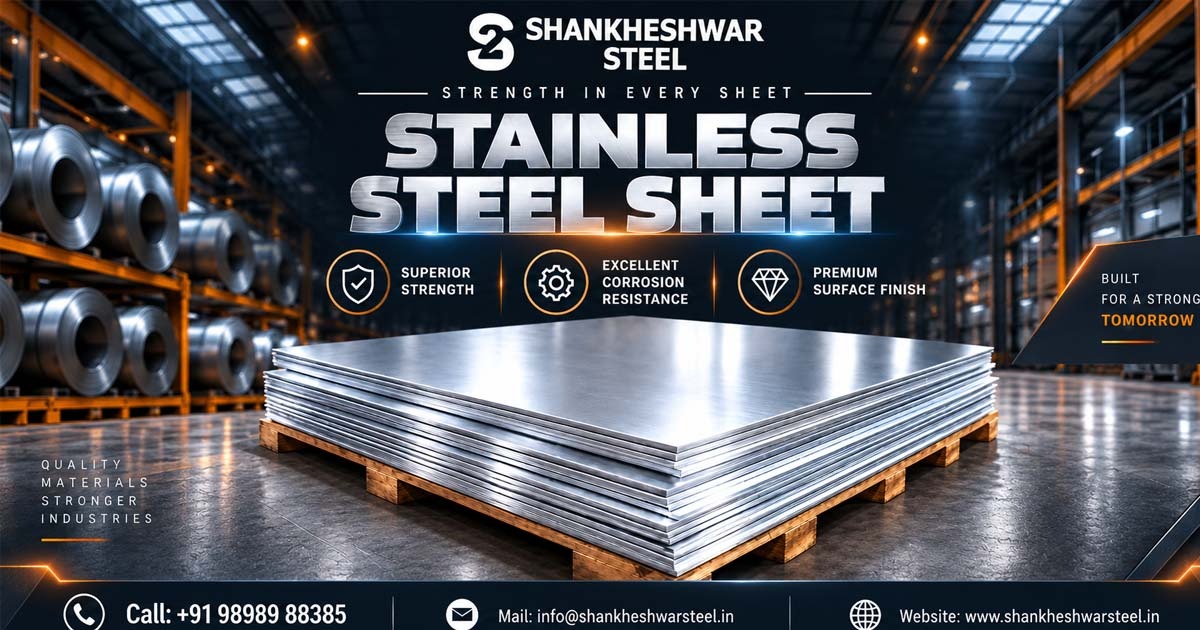
Shankheshwar Steel lists multiple stainless steel plate grades, dimensions and surface finishes on its SS Plate product page.
How Plate Material Moves Through the Fabrication Process
Understanding the fabrication sequence helps procurement teams coordinate material supply with production schedules.
A typical tank or machinery fabrication process involves:
1. Drawing review: Engineers identify the plate grade, thickness, dimensions and component requirements from approved drawings.
2. Material inspection: The fabrication team checks the supplied plate markings, dimensions, surface condition and available documentation.
3. Cutting and preparation: Plates are cut according to component measurements, followed by edge preparation where required.
4. Forming and assembly: Suitable sections are rolled, bent or positioned for fabrication according to the design.
5. Welding and finishing: Components are joined using an appropriate qualified fabrication procedure, followed by the specified finishing operations.
6. Final inspection: Fabricated components are checked for dimensions, weld quality and other project-specific acceptance requirements.
The fabrication sequence varies with the equipment design. Pressure-retaining vessels require particular attention to applicable design codes, approved procedures and inspection requirements.
Preventing Material Loss During Storage and Handling
Procurement and production teams should coordinate storage arrangements as soon as the material arrives.
Recommended practices include:
- Store plates on suitable supports rather than directly on contaminated floors.
- Keep different grades identified and separated.
- Protect finished surfaces from scratches during movement.
- Avoid contact with carbon-steel dust and contaminated handling equipment.
- Keep material identification traceable during cutting and processing.
- Use suitable lifting arrangements to prevent bending or accidental damage.
For projects requiring material traceability, maintain the relevant inspection documents and identification records throughout fabrication.
Quality Checks Buyers Should Complete Before Accepting SS Plates
Material verification should happen before the plates enter production. This reduces the possibility of discovering specification mismatches after cutting or forming.
Use this purchasing checklist:
| Inspection point | What to verify |
| Grade | Confirm the ordered stainless steel grade |
| Thickness | Measure against the purchase specification |
| Dimensions | Check length, width and quantity |
| Surface | Inspect for scratches, dents and visible defects |
| Material identification | Check grade and heat or batch identification |
| Test documents | Review the applicable material test certificate |
| Standard | Verify the specified material standard |
| Quantity | Match the received quantity with the purchase order |
Where required, buyers should also confirm chemical composition and mechanical properties through appropriate documentation or testing.
Shankheshwar Steel describes its industrial plate range and material inspection approach on its website.
Common Procurement Issues That Can Delay Fabrication
Some material purchasing mistakes become visible only after the fabrication team starts working.
| Common issue | Possible reason | Practical preventive action |
| Plate does not match drawings | Incorrect thickness or dimensions | Verify the approved drawing before ordering |
| Welding-related material concerns | Unsuitable grade or material condition | Confirm the welding and material requirements |
| Excessive cutting waste | Poor plate-size planning | Prepare a cutting layout before procurement |
| Surface damage | Improper transportation or storage | Specify handling and surface protection |
| Documentation mismatch | Missing or incorrect material identification | Confirm documents before accepting delivery |
A coordinated discussion between procurement, engineering and fabrication teams can prevent many of these issues.
Industrial Plate Requirement Coordination With Shankheshwar Steel
Shankheshwar Steel supplies stainless steel plates alongside other industrial stainless steel products, including sheets, coils, pipes, tubes, wires and rods. Its Ahmedabad operations serve industrial material requirements across different sectors.
For tank, vessel and machinery projects, buyers can discuss their requirements through the company’s website: https://shankheshwarsteel.in/.
manufacturing support from Ahmedabad, Gujarat, India provides a coordination point for discussing material specifications, product requirements and procurement planning.
Before making an enquiry, keep the following information ready:
- Required stainless steel grade.
- Plate thickness and dimensions.
- Total quantity.
- Intended fabrication application.
- Applicable material standard.
- Surface finish requirements.
- Material test certificate and inspection requirements.
This information helps clarify the material requirement before commercial discussions and order confirmation.
Services
- Stainless steel plate requirement assessment and material consultation.
- Grade, thickness and dimension selection guidance.
- Industrial plate sourcing and procurement coordination.
- Material documentation and delivery requirement coordination.
Location
Ahmedabad and its surrounding industrial network support demand for stainless steel plates used in fabrication, engineering and machinery production. Shankheshwar Steel provides manufacturing support from Ahmedabad, Gujarat, India, with relevant industrial and commercial locations including Ahmedabad, Rakhial, Vatva, Odhav, Naroda, Changodar, Sanand, Bavla, Dholka, Gandhinagar, Kalol, Mehsana, Kadi, Vadodara, Halol, Bharuch, Ankleshwar, Surat, Vapi, Rajkot, Morbi, Jamnagar and Bhavnagar. Delivery availability should be confirmed for the specific project destination.
Frequently Asked Questions
Q: Which stainless steel grade is suitable for industrial storage tanks?
A: SS 304, SS 304L, SS 316 and SS 316L may be considered depending on the stored material, temperature and corrosion conditions. The final grade should follow the engineering specification.
Q: How do buyers determine the required SS plate thickness?
A: Thickness depends on equipment design, loading, operating pressure, temperature and applicable design requirements. Buyers should follow approved engineering drawings rather than selecting thickness by price.
Q: What documents should be checked when purchasing stainless steel plates?
A: Buyers should verify the material test certificate, grade identification, chemical composition, mechanical properties and dimensional details wherever required by the purchase specification.
Q: Can stainless steel plates be used for chemical processing vessels?
A: Yes, suitable stainless steel grades are used for chemical processing equipment. However, chemical compatibility, concentration, operating temperature and corrosion conditions must be evaluated before selection.
Conclusion
Reliable tank and machinery fabrication begins with correct material planning. SS Plate Materials for Tank, Vessel and Machinery Production must match grade, thickness, dimensions and operating conditions. Industrial buyers in Ahmedabad, Gujarat, can coordinate their requirements with Shankheshwar Steel for suitable material selection and procurement support.
Discuss your industrial plate requirements with Shankheshwar Steel. Contact the team for material consultation, grade selection, dimensional requirements and procurement coordination for your upcoming fabrication project.
Website: shankheshwarsteel.in
Call Us: +91 98989 88385
Email Us: info@shankheshwarsteel.in
For more information, please feel free to contact us.