Industrial piping systems require fittings that provide secure connections, proper alignment, and reliable fluid handling. Businesses in Ghana sourcing a Stainless Steel Fittings Exporter To Ghana need suitable materials, accurate dimensions, and dependable supply coordination. Shankheshwar Steel supports these requirements with manufacturing support from Ahmedabad, Gujarat, India.
Understanding Stainless Steel Fittings for Industrial Piping Networks
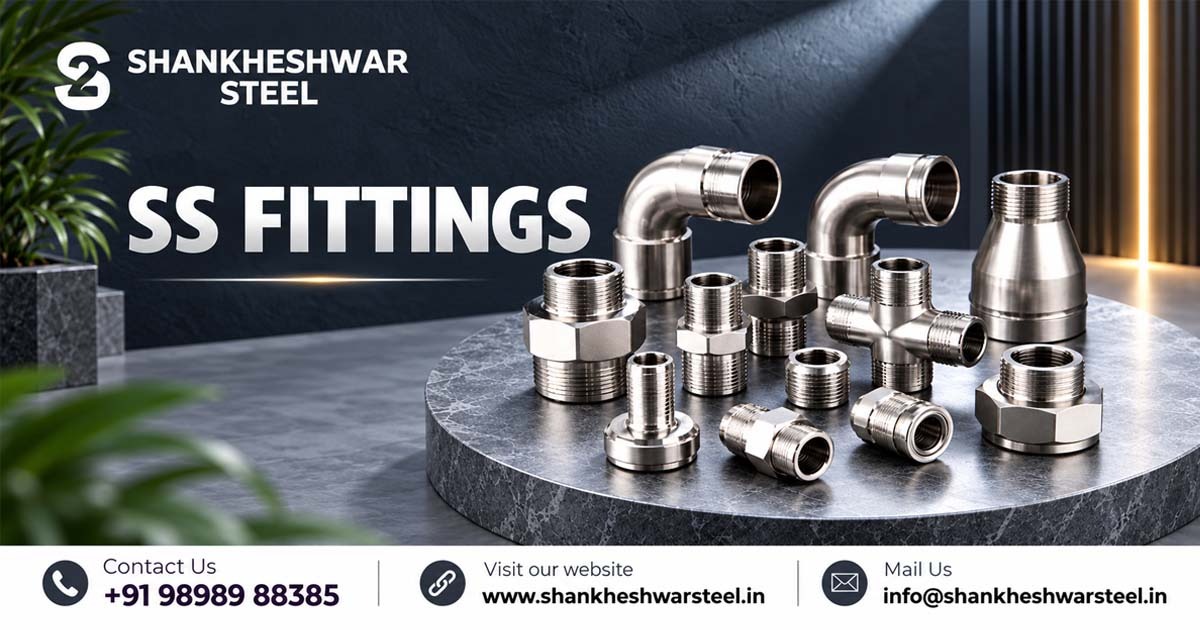
Stainless steel fittings are essential components used to connect, redirect, branch, reduce, or close sections of piping systems. They help maintain the required flow path while providing mechanical connections between pipes, valves, pumps, and other equipment.
Industries in Ghana may require these components for new installations, plant expansion, pipeline replacement, and routine maintenance.
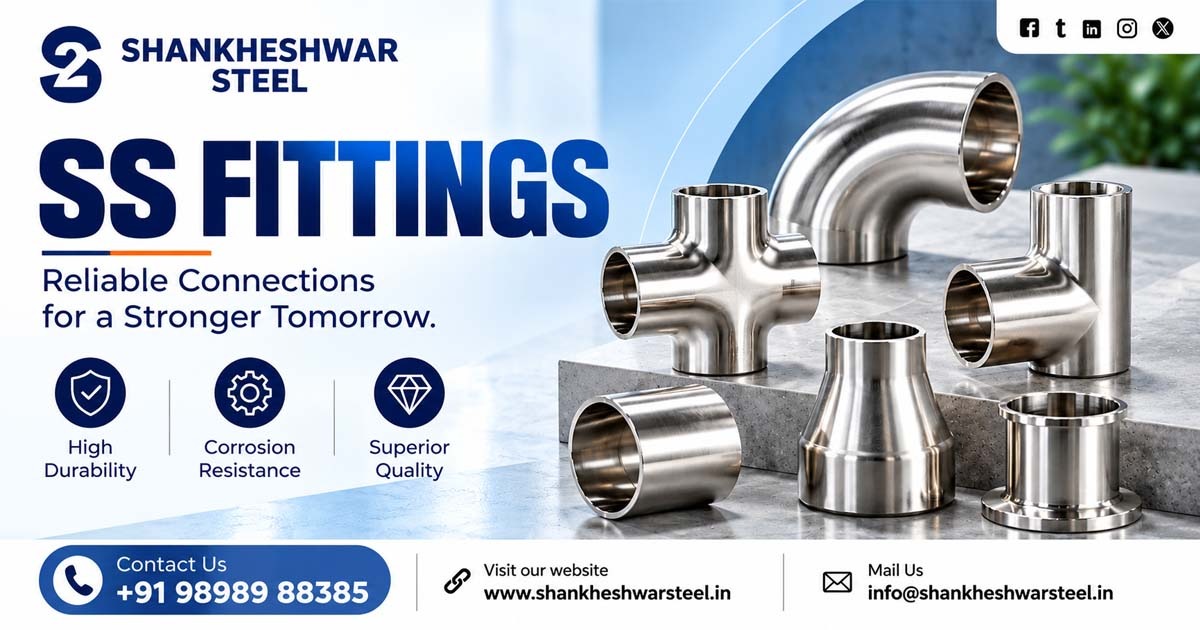
Common stainless steel fitting categories include:
- Elbows: Change the direction of fluid flow within a pipeline.
- Tees: Create branch connections from the main pipeline.
- Reducers: Connect pipes with different diameters.
- Couplings: Join two pipe sections.
- Caps: Close the ends of pipelines.
- Stub Ends: Support specific flange connection arrangements.
- Pipe Bends: Provide directional changes according to piping layouts.
Selecting the correct fitting helps reduce connection problems, leakage risks, and unnecessary maintenance interruptions.
How to Select Stainless Steel Fittings for Ghanaian Industrial Projects
Choosing fittings involves more than matching pipe dimensions. Buyers should evaluate the operating environment and technical requirements of the complete piping system.
Consider the following factors before placing an order:
| Selection Factor | What Buyers Should Check |
| Material grade | Select stainless steel according to corrosion exposure and process conditions. |
| Fitting dimensions | Verify nominal pipe size, outside diameter, and wall thickness compatibility. |
| Connection type | Check whether threaded, socket weld, or butt weld connections are required. |
| Pressure conditions | Match fitting requirements with the pipeline’s design pressure. |
| Temperature | Consider the operating and process temperatures. |
| Fluid compatibility | Evaluate the chemical properties of the transported material. |
| Surface condition | Check finish requirements according to the application. |
| Quantity | Calculate project requirements and maintenance stock. |
Material selection matters: Stainless Steel 304 may suit many general industrial environments, while Stainless Steel 316 is often considered where improved resistance to chloride-related corrosion is required. The final grade should depend on actual operating conditions.
How Stainless Steel Fittings Are Integrated into Piping Systems
Correct fitting installation helps maintain pipeline alignment and connection integrity. The process generally involves the following stages.
Step 1: Review the Piping Layout
Identify connection points, pipe sizes, flow direction, pressure requirements, and fitting positions according to the engineering drawing.
Step 2: Prepare the Pipe Ends
Cut and prepare pipe ends according to the selected connection method. Remove burrs, dirt, oil, and other contaminants before assembly.
Step 3: Position and Connect the Fittings
Align elbows, tees, reducers, or other components with the pipeline. Complete threaded, welded, or other specified connections using appropriate procedures.
Step 4: Inspect and Test the Assembly
Check alignment, connection quality, and visible defects. Conduct suitable pressure or leak testing according to the project requirements before putting the system into operation.
Proper installation procedures help prevent avoidable connection failures and operational interruptions.
Quality Checks Before Importing Stainless Steel Fittings into Ghana
International buyers should establish clear product requirements before confirming an order. This helps avoid dimensional mismatches and material-related problems after delivery.
Important inspection points include:
- Material identification: Verify the specified stainless steel grade and supporting material documentation.
- Dimensional accuracy: Check fitting diameter, wall thickness, end preparation, and overall dimensions.
- Surface inspection: Look for cracks, dents, corrosion, rough finishing, and visible manufacturing defects.
- Connection compatibility: Confirm that fitting ends match the intended piping arrangement.
- Manufacturing consistency: Check uniformity across the supplied batch.
- Documentation: Request applicable inspection reports, material test certificates, and packing details where required.
- Export packaging: Ensure suitable protection against moisture, handling damage, and transportation-related contamination.
Buyers should also confirm the required quantity, delivery schedule, shipping documentation, and destination port arrangements before finalizing procurement.
Custom Order Planning for Different Piping Requirements
Industrial projects rarely follow identical piping layouts. A water treatment installation may require different fitting configurations from a chemical processing facility or food manufacturing plant.
Before requesting a quotation, Ghanaian buyers should prepare:
- Required stainless steel grade.
- Fitting type and connection arrangement.
- Nominal pipe sizes and dimensions.
- Required quantity for each fitting category.
- Applicable drawings or technical specifications.
- Operating pressure and temperature.
- Required inspection and documentation.
- Preferred delivery schedule and destination.
Providing these details allows the supplier to understand the actual procurement requirement and reduce the possibility of incorrect product selection.
Services
- Stainless steel fitting requirement assessment and product consultation.
- Technical coordination for fitting grades, dimensions, and connection types.
- Export order planning and product documentation coordination.
- Assistance with product inspection requirements and shipment preparation.
Location – Ghana
Stainless steel fittings are relevant to Ghana’s infrastructure, construction, water management, energy, and industrial processing sectors. Businesses operating across major commercial and industrial centres may require dependable piping components for installation, expansion, and maintenance projects. Important locations include Accra, Tema, Kumasi, Takoradi, Tamale, Cape Coast, Koforidua, Ho, Sunyani, Bolgatanga, Wa, Techiman, Obuasi, Tarkwa, Ashaiman, Kasoa, Nsawam, Nkawkaw, Aflao, Winneba, Sekondi, Ejisu, and Axim.
Why Choose Shankheshwar Steel for Stainless Steel Fittings Export Requirements?
Selecting an export supplier involves evaluating product suitability, technical communication, material requirements, and order coordination.
Shankheshwar Steel supports buyers looking for stainless steel piping components for industrial and commercial projects. Its manufacturing support from Ahmedabad, Gujarat, India, provides a base for coordinating product requirements and export-related enquiries.
Customers can share their fitting specifications, required quantities, material grades, and project details to discuss suitable sourcing arrangements.
Visit https://shankheshwarsteel.in/ to learn more about the company and its product-related requirements.
Frequently Asked Questions (FAQ)
Q1: Which stainless steel grade is suitable for industrial fittings in Ghana?
A: Stainless Steel 304 and 316 are commonly considered for industrial piping. The appropriate grade depends on the transported fluid, corrosion exposure, temperature, and operating conditions.
Q2: What information should I provide when requesting a fitting quotation?
A: Share the fitting type, material grade, pipe size, connection type, required quantity, and technical specifications. Drawings can also help clarify project requirements.
Q3: How can I prevent leakage at stainless steel fitting connections?
A: Use compatible fittings, correct installation procedures, proper alignment, and suitable joining methods. Inspect connections and conduct appropriate leak testing before operation.
Q4: What should Ghanaian buyers check when importing stainless steel fittings?
A: Buyers should verify material specifications, dimensions, inspection documents, packaging, order quantities, shipping arrangements, and estimated delivery schedules before confirming procurement.
Conclusion
Selecting the right stainless steel fittings requires attention to material compatibility, dimensions, connection methods, and operating conditions. Industrial buyers in Ghana can simplify procurement by defining technical requirements clearly and coordinating with an experienced supplier like Shankheshwar Steel, supported from Ahmedabad, Gujarat, India.
Looking for suitable stainless steel fittings for your industrial project in Ghana? Contact Shankheshwar Steel through its website to discuss product specifications, quantities, and export requirements.
Website: shankheshwarsteel.in
Call Us: +91 98989 88385
Email Us: info@shankheshwarsteel.in
For more information, please feel free to contact us.