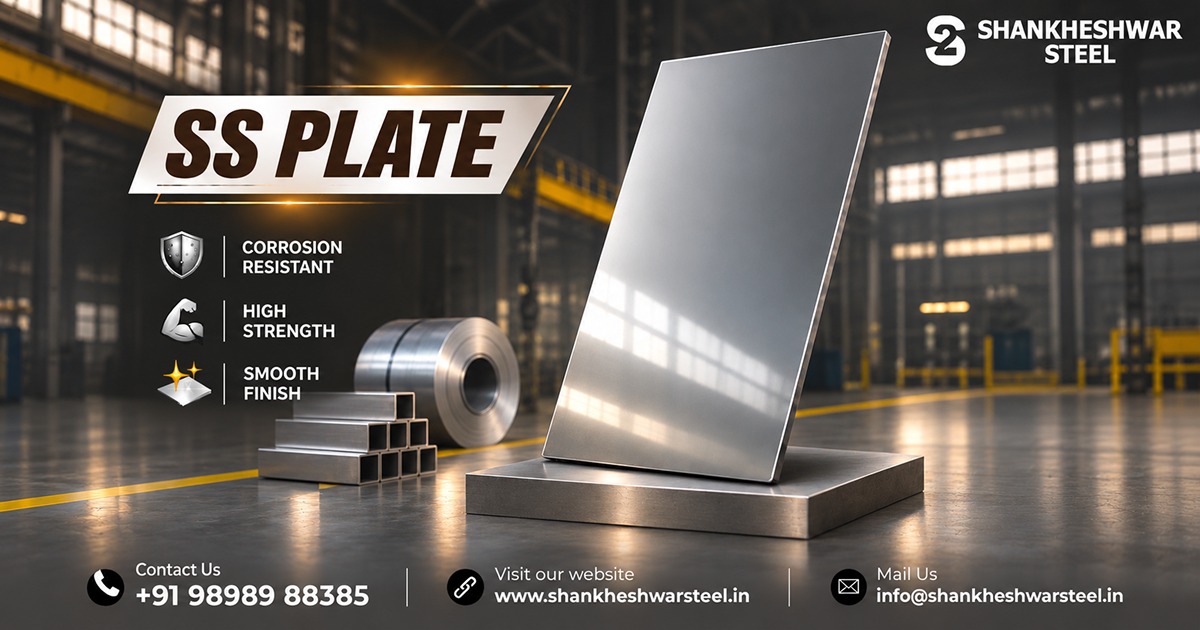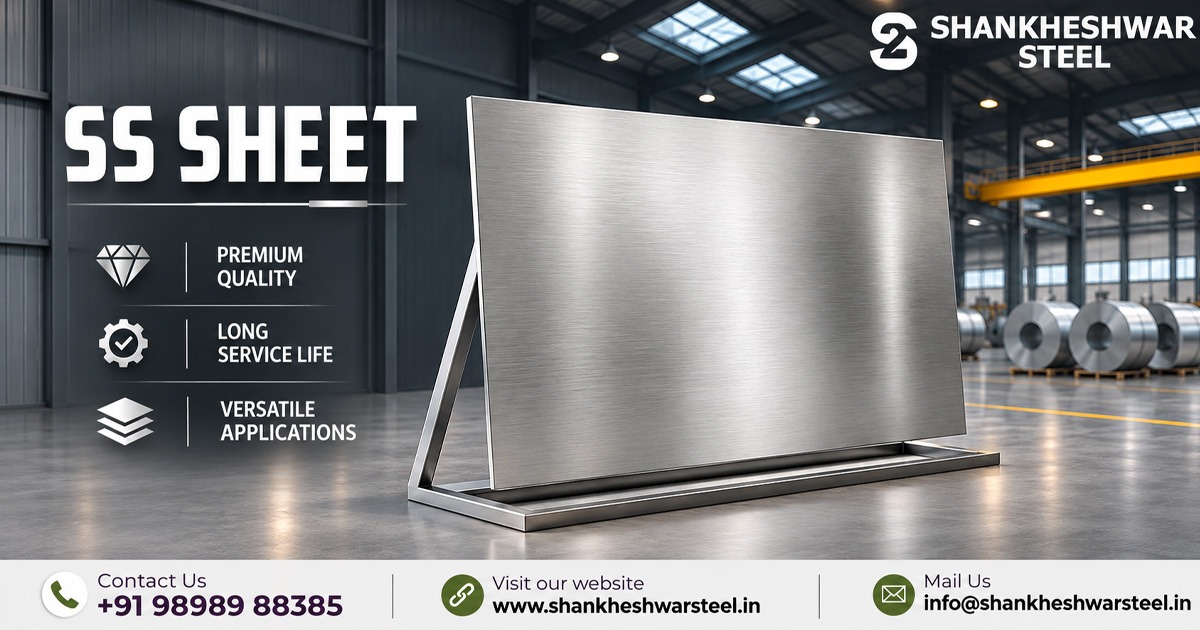
Stainless Steel Sheets for Industrial Fabrication are selected for their strength, corrosion resistance, and fabrication flexibility. In Ahmedabad, Shankheshwar Steel supports industrial buyers in identifying suitable sheet grades, thicknesses, and dimensions for different fabrication requirements.
Understanding How Sheet Selection Affects Fabrication Quality
However, selecting a sheet only by its thickness or appearance can create problems during fabrication. The material must suit the working environment and the manufacturing process.
Common considerations include:
- Corrosion resistance: Important for equipment exposed to moisture, chemicals, or cleaning agents.
- Formability: Determines how easily the sheet can be bent, shaped, or formed.
- Strength: Influences the sheet’s suitability for structural and load-bearing applications.
- Surface finish: Affects appearance, cleaning requirements, and the final product’s surface condition.
- Weldability: Matters when sheets are joined to create fabricated assemblies.
Understanding these factors before purchasing helps reduce material mismatch and fabrication difficulties.
Which Stainless Steel Grade Should a Fabricator Consider?
Different stainless steel grades offer different material properties. The selection should depend on the operating environment, fabrication method, and expected service conditions.
Some commonly considered grades include:
- SS 304: Frequently used for general fabrication, industrial enclosures, kitchen equipment, and processing components.
- SS 316: Considered for applications requiring improved resistance to certain corrosive environments, particularly where chloride exposure is a concern.
- SS 202: Used in selected general-purpose applications where project requirements and environmental conditions permit.
- SS 430: A ferritic stainless steel considered for applications requiring specific magnetic and corrosion-resistance properties.
Before finalizing a grade, buyers should verify the chemical composition, applicable material specification, and suitability for the intended environment.
How Sheet Thickness Influences the Final Fabricated Product
Thickness selection directly affects the weight, rigidity, formability, and fabrication requirements of a finished component.
For example, a control panel enclosure and a heavy industrial equipment cover may require different sheet thicknesses because their structural and operating requirements are different.
Consider these points before ordering:
- Load requirements: Determine whether the sheet will support equipment, withstand pressure, or function as a protective cover.
- Bending requirements: Check whether the selected thickness is suitable for the required bends and forming operations.
- Welding method: Discuss material thickness with the fabrication team to plan appropriate joining methods.
- Final dimensions: Account for bending allowances and fabrication tolerances when preparing drawings.
- Weight restrictions: Consider the total weight when sheets are used in movable equipment or large assemblies.
Selecting thickness based only on the lowest purchase price can increase fabrication costs if the material does not suit the design.
Fabrication Operations That Depend on Sheet Properties
Stainless steel sheets pass through several manufacturing operations before becoming finished industrial products.
The typical fabrication sequence includes:
Step 1 – Material Inspection
Check the grade, thickness, surface condition, and dimensions against the purchase requirement.
Step 2 – Cutting and Sizing
Sheets are cut according to engineering drawings using suitable cutting equipment and processes.
Step 3 – Bending and Forming
The material is shaped into required profiles, covers, panels, brackets, or structural sections.
Step 4 – Welding and Assembly
Where required, fabricated sections are joined using a suitable welding procedure.
Step 5 – Finishing and Inspection
The finished component is checked for dimensional accuracy, surface condition, weld quality, and conformity with the drawing.
The actual process depends on the component design, sheet grade, and fabrication method.
Preventing Surface Damage During Storage and Handling
Stainless steel sheets can develop scratches, dents, stains, or surface contamination if they are handled incorrectly.
These problems may affect the appearance and suitability of the finished fabricated product.
Recommended handling practices include:
- Store sheets on clean, dry, and properly supported racks.
- Avoid dragging one sheet across another during movement.
- Use suitable lifting equipment for large or heavy sheets.
- Keep protective coverings in place where provided.
- Separate stainless steel material from sources of carbon-steel contamination.
- Avoid contact with unsuitable chemicals and contaminated handling tools.
Quality Checks Before Approving a Sheet Purchase
Procurement teams should verify the material before accepting a stainless steel sheet order.
A practical inspection checklist includes:
- Grade verification: Confirm that the supplied grade matches the purchase order.
- Thickness measurement: Check thickness at appropriate locations.
- Dimensional inspection: Verify sheet length and width.
- Surface examination: Look for scratches, dents, rust-like staining, and other visible defects.
- Documentation: Request the applicable material test certificate or inspection documents where required.
- Quantity verification: Match the delivered quantity with the order.
- Specification review: Confirm applicable standards and technical requirements in the purchase documents.
Common Fabrication Problems and Their Practical Checks
Material selection and handling can influence the quality of fabricated stainless steel components. The following table highlights issues that buyers and fabrication teams should consider.
| Common Issue | Possible Cause | Practical Check |
| Sheet bending cracks | Unsuitable grade or forming conditions | Review grade and bending requirements |
| Surface scratches | Improper storage or handling | Inspect protective covering and handling methods |
| Welding distortion | Heat input or fabrication sequence | Review welding procedure and assembly planning |
| Corrosion spots | Surface contamination or unsuitable material | Examine exposure conditions and cleaning practices |
| Dimensional mismatch | Incorrect cutting or measurement | Verify drawings and sheet dimensions |
| Uneven finished surface | Material condition or finishing process | Inspect the sheet before fabrication |
Services
- Stainless Steel Sheet Selection: Assistance in identifying suitable grades based on application requirements.
- Material Specification Guidance: Support in discussing thickness, dimensions, and surface finish requirements.
- Industrial Material Sourcing: Coordination of material requirements for fabrication and manufacturing projects.
- Order and Documentation Assistance: Support in clarifying quantities, specifications, and applicable material documentation.
Planning Stainless Steel Sheet Requirements With Shankheshwar Steel
Industrial buyers need more than a material name when preparing a sheet purchase order. Grade, thickness, finish, dimensions, and quantity must be clearly defined to avoid confusion during procurement and fabrication.
Shankheshwar Steel provides an industrial steel sourcing point of contact through its website, https://shankheshwarsteel.in/.
With manufacturing support from Ahmedabad, Gujarat, India, the company can be approached for discussions about stainless steel material requirements and product selection.
Before placing an order, buyers should share their application details, drawings where applicable, material specifications, and expected quantities to make the requirement clearer.
Location
Ahmedabad serves as an important industrial and commercial centre for stainless steel procurement and fabrication requirements. Businesses across Gujarat can explore material sourcing for their projects in Ahmedabad, Sanand, Changodar, Bavla, Vatva, Naroda, Odhav, Kathwada, Aslali, Dholka, Gandhinagar, Kalol, Mehsana, Himmatnagar, Vadodara, Halol, Bharuch, Ankleshwar, Vapi, Surat, Rajkot, Morbi, Jamnagar, and Bhavnagar.
FAQs
Q: Which stainless steel grade is commonly used for industrial fabrication?
A: SS 304 is commonly considered for general industrial fabrication. SS 316, SS 202, and SS 430 may also be suitable depending on corrosion exposure, mechanical requirements, and application conditions.
Q: How do I decide the thickness of stainless steel sheets?
A: Consider the component’s load, dimensions, bending requirements, welding process, and operating environment. The engineering drawing and fabrication method should guide the final thickness selection.
Q: What documents should buyers request when purchasing stainless steel sheets?
A: Buyers can request applicable material test certificates, grade information, dimensional details, and inspection documents. Documentation should match the purchase order and project requirements.
Conclusion
Successful stainless steel fabrication starts with matching the material grade, thickness, dimensions, and surface finish to the actual application. Industrial buyers in Ahmedabad and across Gujarat can discuss their requirements with Shankheshwar Steel and plan material procurement with suitable manufacturing support.
Planning an industrial fabrication project? Contact Shankheshwar Steel to discuss stainless steel sheet grades, thickness requirements, dimensions, and material sourcing for your project.
Website: shankheshwarsteel.in
Call Us: +91 98989 88385
Email Us: info@shankheshwarsteel.in