Introduction
Industrial fabrication projects require stainless steel sheets with suitable grades, thicknesses, dimensions, and surface finishes. Buyers in Nigeria must consider corrosion exposure, fabrication methods, and operating conditions before purchasing. Shankheshwar Steel, with manufacturing and supply support from Ahmedabad, Gujarat, India, provides stainless steel sheet sourcing information for industrial requirements.
Selecting Stainless Steel Sheets According to Fabrication Requirements
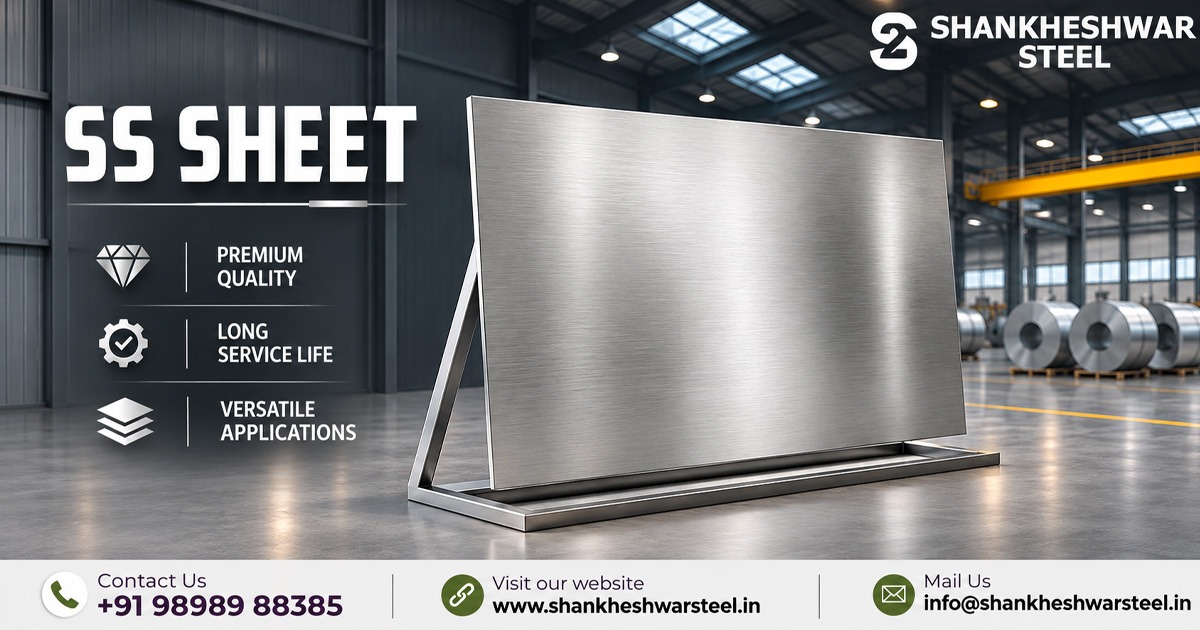
Stainless steel sheets are flat metal products used to manufacture equipment, enclosures, structural components, machine parts, and industrial assemblies. Their corrosion resistance, strength, and formability make them suitable for fabrication environments where ordinary steel may require additional protective coatings.
The correct material depends on the component’s purpose and the conditions in which it will operate.
Common stainless steel grades include:
- SS 202: Considered for selected general-purpose fabrication applications where the environment permits its use.
- SS 304: Commonly used for equipment, enclosures, processing components, and general industrial fabrication.
- SS 304L: Considered where lower carbon content is relevant to welding requirements.
- SS 316: Often selected for applications involving more aggressive corrosion exposure.
- SS 316L: Used where corrosion resistance and welded fabrication requirements influence material selection.
- SS 430: Suitable for certain applications where its properties and environmental limitations meet the design requirement.
Buyers should not select a grade based only on its purchase price. Chemical exposure, moisture, cleaning practices, temperature, and expected service conditions all influence material suitability.
How Sheet Properties Influence the Fabrication Process
A stainless steel sheet passes through different fabrication operations depending on the final component design. Understanding these operations helps buyers specify material that can be processed without unnecessary production difficulties.
Typical fabrication processes include:
- Cutting: Sheets are cut into required shapes using suitable mechanical or thermal cutting methods.
- Bending: Sheet thickness, grade, and bend radius influence forming requirements.
- Welding: Material grade, thickness, joint preparation, and welding procedure affect the finished assembly.
- Drilling and machining: Hole positions and component dimensions must match the fabrication drawing.
- Surface finishing: Grinding, polishing, or brushing may be required depending on appearance and operating conditions.
An important consideration is that surface finish is not merely decorative. In applications involving regular cleaning, product contact, or moisture exposure, surface condition can influence maintenance and cleanliness requirements.
For example, a hypothetical food-processing equipment fabricator may require SS 304 sheets for equipment panels and SS 316 sheets for components exposed to more aggressive cleaning chemicals. The final grades must be established through the actual chemical and operating conditions rather than this example alone.
Industrial Applications Where Sheet Selection Matters
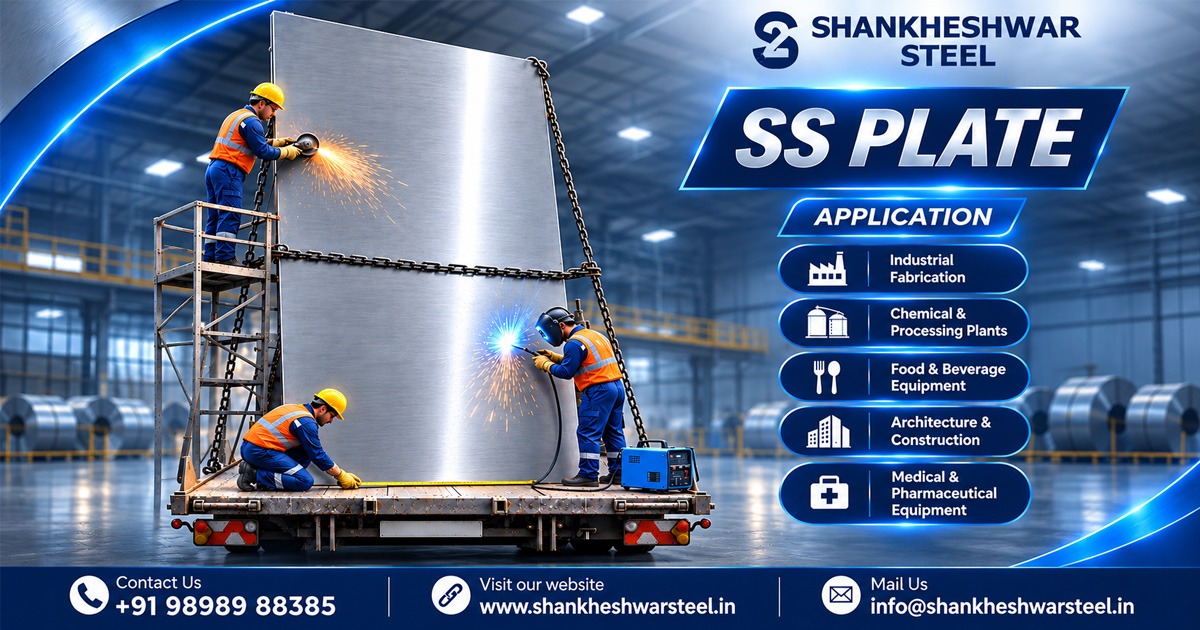
Stainless steel sheets are used across several industries because they can be cut, formed, welded, and finished into different components.
Important application areas include:
- Chemical processing: Equipment covers, fabricated tanks, protective panels, and selected process components.
- Food and beverage manufacturing: Processing equipment, work surfaces, storage components, and machinery enclosures.
- Oil and gas: Selected equipment parts, protective covers, and fabricated components based on operating conditions.
- Pharmaceutical production: Equipment panels, enclosures, and components where cleanliness and material compatibility matter.
- Construction and infrastructure: Architectural panels, cladding, fabricated structures, and interior components.
- Marine and coastal projects: Components requiring appropriate resistance to saltwater exposure.
- Cement and fertilizer plants: Equipment covers, fabrication assemblies, and industrial maintenance components.
For Nigerian industries, environmental conditions deserve particular attention. Coastal locations may expose fabricated components to salt-laden air, while chemical and processing facilities may involve specific corrosive substances. The material grade should reflect the actual exposure rather than relying on a general-purpose specification.
Technical Details That Should Match the Fabrication Drawing
When sourcing Stainless Steel Sheets for Industrial Fabrication and Supplier In Nigeria, buyers should communicate the technical requirements clearly. A mismatch between the ordered material and the fabrication drawing can lead to cutting losses, forming difficulties, or unnecessary procurement costs.
The important specifications include:
| Specification | What buyers should confirm |
| Material grade | SS 202, 304, 304L, 316, 316L, or another specified grade |
| Thickness | Required thickness in millimetres |
| Sheet dimensions | Width and length according to drawings |
| Surface finish | 2B, 2D, BA, No. 1, No. 4, mirror, or other required finish |
| Manufacturing standard | Applicable ASTM, ASME, JIS, EN, or project-specific standard |
| Material documentation | Grade identification and applicable test certificates |
Hot-rolled and cold-rolled sheets should also be distinguished. Cold-rolled sheets are commonly selected where dimensional accuracy and surface appearance are important, while hot-rolled products may suit applications with different thickness and finish requirements.
Shankheshwar Steel’s published stainless steel sheet information lists grades including 201, 202, 304, 304L, 316, 316L, 310, 321, and 430, along with several other grades. Its listed product information also covers different dimensions and finishes. Buyers should confirm current availability and the applicable specification before ordering.
Buyer Checkpoints Before Requesting a Quotation
Before finalising a purchase, industrial buyers should review these five points:
1. Application environment: Identify whether the sheet will face moisture, chemicals, heat, outdoor exposure, or frequent cleaning. This helps determine the appropriate grade.
2. Thickness and component design: Check the engineering drawing, load requirements, bending radius, and fabrication method before specifying thickness.
3. Sheet dimensions: Confirm the required width and length to reduce cutting waste and simplify material planning.
4. Surface finish: Decide whether the component needs a standard industrial finish, brushed appearance, mirror finish, or another specified surface.
5. Inspection and documentation: Confirm material identification, applicable standards, inspection requirements, and material test certificates where required.
One practical purchasing insight is to finalise the grade and thickness together rather than treating them as separate decisions. A sheet that meets the dimensional requirement may still be unsuitable if its grade cannot withstand the actual service environment.
Shankheshwar Steel: Stainless Steel Sheet Sourcing from Ahmedabad
Shankheshwar Steel is associated with the supply and trading of stainless steel industrial materials, including sheets, plates, coils, pipes, tubes, rods, and other products.
The company’s website identifies its Ahmedabad, Gujarat, facility at Ganesh Industrial Estate, Rakhial. Its published product information includes stainless steel sheets in different grades, dimensions, and finishes.
For Nigerian industrial buyers, manufacturing and supply support from Ahmedabad, Gujarat, India, provides an additional sourcing point when evaluating stainless steel sheet requirements.
Before discussing an order, buyers can share:
- Required stainless steel grade and thickness.
- Sheet dimensions and surface finish.
- Applicable material standards.
- Estimated quantity and project requirements.
- Drawings or technical specifications, where available.
Visit Shankheshwar Steel or contact the company through its official contact page to discuss product requirements.
Stainless Steel Sheet Supply Requirements Across Nigeria
Nigeria has industrial, commercial, construction, oil and gas, and manufacturing activities that create demand for fabricated stainless steel components. Buyers sourcing stainless steel sheets can evaluate material requirements according to their project locations and industry applications.
For businesses searching for a Stainless Steel Sheets for Industrial Fabrication and Supplier In Nigeria, relevant industrial and commercial locations include:
Lagos, Ikeja, Apapa, Lekki, Port Harcourt, Onne, Aba, Enugu, Onitsha, Nnewi, Owerri, Warri, Benin City, Kano, Kaduna, Abuja, Ibadan, Ogun, Sagamu, Ota, Akure, Uyo, Calabar, Jos, and Asaba.
These locations represent different manufacturing, trading, construction, and industrial markets. Buyers should consider transportation planning, material documentation, import requirements, and project delivery coordination when sourcing from Ahmedabad, Gujarat, India.
Frequently Asked Questions
Q1. Which stainless steel grade is suitable for industrial fabrication in Nigeria?
SS 304 is commonly considered for general fabrication, while SS 316 may be more appropriate for certain corrosive environments. The final selection depends on chemical exposure, moisture, temperature, and application requirements.
Q2. What thickness is available for stainless steel sheets?
Thickness depends on the product range and supplier availability. Buyers should specify their required thickness according to component design, load conditions, and fabrication methods.
Q3. Which surface finish should I select for stainless steel sheets?
2B and 2D finishes are common industrial options, while BA, No. 4, and mirror finishes may suit particular appearance or application requirements. Selection depends on cleaning, fabrication, and surface requirements.
Q4. Can Nigerian buyers source stainless steel sheets from Ahmedabad, India?
Yes, buyers can discuss international sourcing requirements with Shankheshwar Steel in Ahmedabad. Grade, dimensions, quantity, documentation, shipping arrangements, and delivery terms should be confirmed before placing an order.
Conclusion
Successful stainless steel fabrication depends on selecting the correct grade, thickness, dimensions, and surface finish for the intended application. Industrial buyers in Nigeria should confirm technical specifications before procurement. Shankheshwar Steel offers a sourcing point from Ahmedabad, Gujarat, India, for discussing stainless steel sheet requirements and industrial material needs.
Planning your next fabrication project? Contact Shankheshwar Steel to discuss stainless steel sheet specifications and sourcing requirements.
Website: shankheshwarsteel.in
Call Us: +91 98989 88385
Email Us: info@shankheshwarsteel.in